-
Five skills healthcare graduates need for a digital future
October 17, 2026
-
How students can protect their mental health during final exams
October 17, 2026
-
Cybersecurity specialist Kiru Pillay appointed Richfield IT dean
October 17, 2026
-
Eight study tips to help students prepare for exams
October 17, 2026
-
Put your phone away: Five ways to study smarter for final exams
October 17, 2026
-
UFS drama student wins bursary to explore storytelling through movement
October 17, 2026
-
Van Tonder, Padayachee claim top honours at Madibaz Sport Awards
October 17, 2026
-
Five affordable foods to help students through exam season
October 17, 2026
-
Publication fees limit choices for African researchers
October 17, 2026
-
Graduates need AI skills – and the judgement to use them
October 17, 2026
Hundreds descended upon Wits to hear the legendary Jack Ma, Executive Chairman of Alibaba Group, address entrepreneurs, students and policy makers. Wits University was selected as the site of the important event, Netrepreneurs: The Rise of Africa’s Digital Lions, organised by Alibaba and the United Nations Conference on Trade and...
Read more
Former Wits Vice-Chancellor and Principal, Professor Loyiso Nongxa has been elected as a Vice-President of the International Mathematical Union (IMU). The acclaimed maths fundi was elected during the IMU’s Annual General Meeting held in Brazil from 29 to 30 July. The IMU is an international non-governmental and non-profit scientific organisation aimed...
Read more
Dr Judy Dlamini elected as the new chancellor of Wits University. The University of the Witwatersrand is proud to announce that Dr Judy Dlamini has been duly elected as the new Chancellor of the University, a position that she will take up from 1 December 2018. She takes the...
Read more
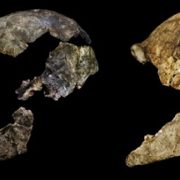
The “virtual” revisiting of a fossil described as “the oldest evidence of human evolution in South Africa” shows surprising results, compared to modern humans. A cranium of a four-million-year-old fossil, that, in 1995 was described as the oldest evidence of human evolution in South Africa, has shown similarities to...
Read more
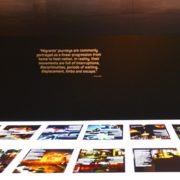
Dr Mpho Matsipa, researcher at the Wits City Institute is curating an architectural exhibition at the architectural museum in Munich. The exhibition African Mobilities: This is not a refugee camp, curated by Matsipa addresses the complex forms of mobility within Africa and the diaspora. “It explores experimental approaches in architecture and...
Read more
Entrepreneurs at the Wits Digital Tshimologong Precinct show Johannesburg Executive Mayor, Herman Mashaba how creative they are. Mashaba visited the entreprenuerson 16 May 2018 to explore how Wits University is developing digital entrepreneurs by incubating start-ups in the Tshimologong Precinct and also explored how the precinct is contributing to...
Read more
Professor Laetitia Rispel has been elected as the President of the World Federation of Public Health Associations (WFPHA). Professor Laetitia Rispel holds the DST/ NRF SARChI Chair entitled Research on the Health Workforce for Equity and Quality, at Wits. She is the former head of the Wits School of Public Health. Rispel...
Read more
The human-like features of Homo naledi’s brain surprised the research team that examined the fossil’s brain imprints. The recently-discovered species Homo naledi may have had a pint-sized brain, but that brain packed a big punch. New research by Ralph Holloway and colleagues – that include researchers from the University of the...
Read more
A Master’s graduate has produced research that impacts health policy in the field of cervical cancer, which is one of the top five cancers that kill women. Dr Gbenga Olorunfemi received a Certificate of Commendation at the Faculty of Health Sciences prizegiving on 4 April 2018 to acknowledge his...
Read more
Around 260 million years, the earth was dominated by mammal like reptiles called therapsids. The largest of these therapsids were the dinocephalians, a genus composed of several herbivorous and carnivorous species. Then something enormous happened: a mass extinction event killed off between 75% and 80% of all the creatures that lived...
Read more
All rights reserved | A mediaEQ initiative