
15 years of SA-CERN scientific excellence, partnerships
National Research FoundationResearch January 30, 2025 News desk
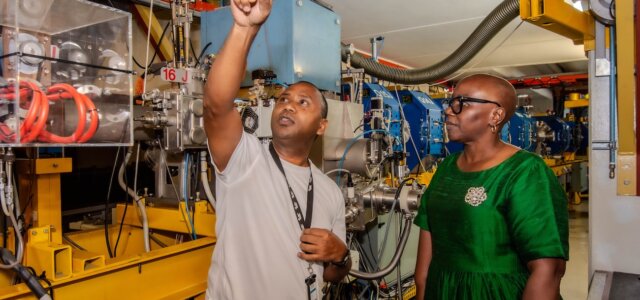
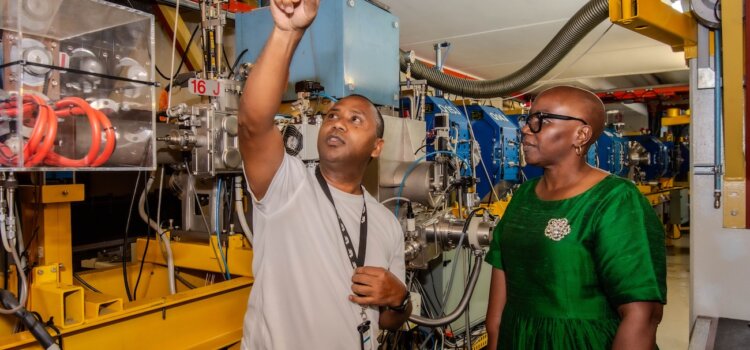
The high-energy physics community gathered at NRF-iThemba LABS in Cape Town from 20 – 21 January 2025 to celebrate the 15th anniversary of the South Africa-European Organisation for Nuclear Research (SA-CERN) Programme.
Funded jointly by the Department of Science, Technology and Innovation (DSTI) and the NRF, the programme represents South Africa’s formal participation in CERN’s global scientific initiatives while strengthening South Africa’s international partnerships. This has fostered significant advancements in the country’s physics capabilities, associated technologies, and innovation. Over the years, the programme has facilitated collaboration and access to global and cutting-edge research infrastructure for South African physicists, enabling them to contribute to significant global scientific advances, such as the discovery of the Higgs-Boson particle in July 2012.
The celebrations featured a series of high-level talks and reflections on the SA-CERN Consortium and included a keynote address by the Deputy Minister for Science, Technology & Innovation, Ms Nomalungelo Gina, and a pre-recorded congratulatory message from the NRF Board Chairperson, Prof Mosa Moshabela. Other programme highlights included presentations and interactive panel discussions from key stakeholders, leading physicists, and SA-CERN students.
Setting the tone for the two-day event, Dr Mike Lamont, Director for Accelerators and Technology at CERN; Prof John Ellis from King’s College London & CERN; and Prof Azwinndini Muronga, DVC: Research, Innovation and Internationalization at Nelson Mandela University, gave a bird’s eye view of the 15 Years of SA-CERN. A shared sentiment among the trio was that there should be continued investment in research and development to maintain the country’s competitive edge in the global scientific arena. Acknowledging that the programme already has a footprint across 10 institutions in the country, the presentation highlighted a need to expand participation to help increase diversity within the field of physics and leverage the programme’s successes to inspire the next generation of scientists.
In her keynote address, Ms Gina stated that the celebration of the SA-CERN Programme reaffirmed South Africa’s commitment to excellence in science and international collaboration. She also commended the critical role of partnerships like SA-CERN in advancing knowledge, driving innovation, and creating opportunities for future generations in science and technology.
Furthermore, the Deputy Minister said, “South Africa’s association with CERN is informed by, among others, the country’s strategic objective of gaining access to critical and world-class global research infrastructure. We recognise global research infrastructure as critical for advancing various strategic scientific areas such as research and the development of innovation policies, boosting scientific knowledge generation, and accelerating technology development.”
“While the event was primarily aimed at celebrating the past achievements of the 15-year milestone, it presented an opportunity to reflect on the impact of the SA-CERN programme, both from a knowledge and societal perspective, as well as the contribution to the advancement of transformation, innovation, excellence and sustainability within the National System of Innovation,” added Ms Gina.
In his closing remarks of the first session, NRF Deputy CEO Dr Angus Paterson thanked SA-CERN’s funders, key stakeholders, the science community, international partners, and the local organizing committee. He also touched on SA-CERN’s relevance and place in the NSI for strategically structured funded programmes and the value of a local SA governance and management structure that oversees the strategy and implementation. “Along with continued investment in research and development, there should also be a strong focus on establishing and maintaining a pipeline through science awareness initiatives,” said Dr Paterson.
The remainder of the celebration served as a platform to showcase the contributions of South African scientists, especially emerging ones who have benefited from the programme, and who have shared their experiences of working on international collaborations and the transformative impact it has had on their careers. Through poster presentations and experiments, researchers were able to highlight ground-breaking research projects and to share insights and findings with their peers.
The interactive panel discussions delved into critical topics in the realm of physics related to the future of the SA-CERN programme, and the importance of fundamental science as a key driver for development in South Africa and on the African continent. Experts debated the future of international scientific partnerships; SA-Technology and Knowledge Transfer; SA-CERN Outreach & Development; as well as teacher training. These discussions provided a platform for thought leadership and were a catalyst for conversations around innovation that would impact the future trajectory of the SA-CERN Programme and South Africa’s position as a key player in the international physics landscape.

News desk
News desk writes, collates and publishes relevant news for Yiba.


